State: Reject in writing
Pennsylvania: The Rules Your Auto Policy Must Follow
Pennsylvania requires a $5,000 first-party medical benefit, makes insurers offer uninsured and underinsured motorist coverage on strict rejection forms, and gives you 60 days' notice before most cancellations and nonrenewals.
By PolicyBrook Editorial Team Updated 6-minute read
Declarations
Pennsylvania- UM/UIM rule
- Reject in writing
- Minimum liability
- 15/30/5
- Insurer cancellation notice
- 60 days (15 some reasons)
- Nonrenewal notice
- 60 days
In brief
A Pennsylvania policy must carry at least $15,000/$30,000/$5,000 of liability coverage and a $5,000 medical benefit. Insurers must offer uninsured and underinsured motorist coverage; you can decline either one only by signing the statute's written rejection form, and a form that does not comply is void. After the first 60 days, an insurer may cancel only for a short list of reasons. The notice must arrive at least 60 days ahead, or 15 days for nonpayment or a suspension or revocation.
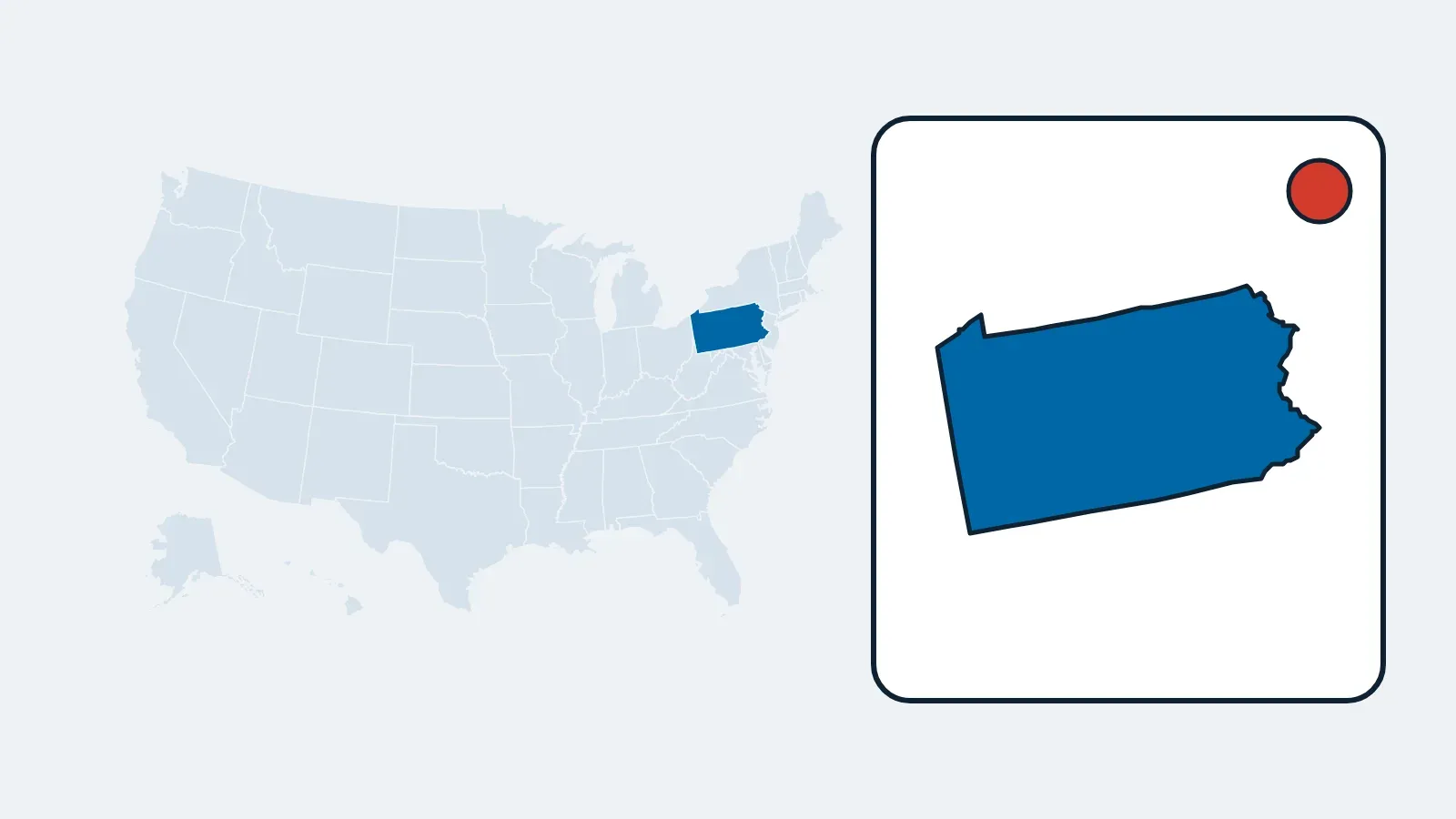
Pennsylvania policy rules
State schedule- UM coverage rule
- Reject in writing
- Minimum liability
- 15/30/5Plus a $5,000 first-party medical benefit (75 Pa.C.S. §1711)
- UM/UIM rule
- Must be offered; rejected only on signed statutory formsA noncompliant form is void and coverage equals liability limits (75 Pa.C.S. §1731)
- Insurer cancellation notice
- 60 days; 15 days for nonpayment or a license or registration suspension or revocationAfter 60 days, only the reasons in 40 P.S. §991.2004
- Nonrenewal notice
- 60 daysSame notice section as cancellation (40 P.S. §991.2006)
- Regulator
- Pennsylvania Insurance Department
Minimum limits and the medical benefit
Under 75 Pa.C.S. §1702, financial responsibility in Pennsylvania means at least $15,000 for injury to one person, $30,000 for injury to two or more people, and $5,000 for damage to other people's property in one accident, written as 15/30/5. The Pennsylvania Insurance Department (PID) notes that some companies sell a $35,000 combined single limit that meets both minimums.
Section 1711 adds a first-party benefit: every policy covering a vehicle registered and operated in Pennsylvania must include a $5,000 medical benefit. PID describes it as paying medical bills for you and others your policy covers. It is separate from Part A, which pays other people when you are at fault. Compare it with the national picture in personal injury protection.
These are low numbers for a serious crash. The limits gap worksheet shows how quickly $15,000 per person is used up. PennDOT accepts an insurance ID card, a declarations page, a valid binder or a letter from your insurer as proof, and tells drivers to keep the ID card in the vehicle.
UM and UIM must be offered; rejection takes a signed form
Section 1731 says no policy for a vehicle registered or principally garaged in Pennsylvania may be issued unless uninsured motorist (UM) and underinsured motorist (UIM) coverage are offered. Buying them is optional. To decline, the first named insured signs and dates a rejection form, and each form must be printed on its own page in prominent type.
The rules for these forms are strict. A rejection form that does not follow the section is void. If the insurer cannot produce a valid signed form, the UM or UIM coverage on that policy equals your bodily injury liability limits. A valid rejection applies to you and to relatives who live with you. See Part C for what each coverage pays.
| Coverage | Insurer must | To remove it |
|---|---|---|
| Uninsured motorist | Offer it | First named insured signs and dates the statutory rejection form |
| Underinsured motorist | Offer it | A separate signed and dated rejection form |
| Either, without a valid form | Provide it | Coverage equals your bodily injury liability limits |
When a Pennsylvania insurer can cancel or refuse to renew
Pennsylvania's Act 68 rules are in 40 P.S. §991.2001 and the sections after it. Under §991.2002, they do not apply to a policy that has been in effect less than 60 days unless it is a renewal, but an insurer that cancels during those first 60 days must still give you its reason in writing. After 60 days, §991.2004 allows cancellation only for these reasons:
- Nonpayment of premium.
- A suspension or revocation during the policy period of the kind the statute lists. For some drivers, the statute allows the insurer only to exclude that driver, not to cancel the policy.
- A determination that the insured concealed a material fact.
Section 991.2006 sets the notice. A cancellation or refusal to renew may take effect no sooner than 60 days after the notice is mailed or delivered. When the reason is nonpayment or a suspension or revocation, the effective date may be 15 days after mailing or delivery.
Where to ask and complain
- Check the dates and the reason. Most cancellations and nonrenewals need 60 days' notice; those based on nonpayment or a suspension or revocation can take effect after 15.
- Request a review within 30 days if you think a cancellation's reason or notice does not meet Act 68.
- Contact the Pennsylvania Insurance Department at 1-877-881-6388 or through its Consumer Services Bureau at pa.gov/agencies/insurance.
- Keep coverage continuous. PID warns that a lapse can lead to a registration suspension; see lapse and reinstatement.
Policyholder questions
Do I have to buy uninsured motorist coverage in Pennsylvania?
No, it is optional, but the insurer must offer it. You decline it only by signing the statutory rejection form. If the form is missing or defective, the coverage equals your liability limits.
How much notice does a Pennsylvania insurer have to give before cancelling?
At least 60 days in most cases. For nonpayment or a suspension or revocation, the cancellation can take effect 15 days after the notice is mailed or delivered (40 P.S. §991.2006).
Can a Pennsylvania insurer cancel a brand-new policy?
During the first 60 days, the Act 68 reason list does not apply to a new policy that is not a renewal, but the insurer must give you its reason in writing.
What is the $5,000 medical benefit?
It is first-party coverage required by 75 Pa.C.S. §1711 that pays medical bills for you and others covered by your policy. See Part B for how medical coverage works in the standard policy.
Sources
- Pennsylvania Consolidated Statutes, 75 Pa.C.S. §1702 — Definitions (financial responsibility) (Justia, 2025)
- Pennsylvania Consolidated Statutes, 75 Pa.C.S. §1711 — Required benefits (Justia, 2025)
- Pennsylvania Consolidated Statutes, 75 Pa.C.S. §1731 — UM and UIM coverage (Justia)
- Pennsylvania Insurance Department — Auto insurance
- PennDOT — Insurance overview
- 40 P.S. §991.2002 — Scope of Act 68 (FindLaw)
- 40 P.S. §991.2004 — Reasons for cancellation (FindLaw)
- 40 P.S. §991.2006 — Notice of cancellation or refusal to renew (FindLaw)
Facts on this page were checked against these sources on November 15, 2026. The cancellation rules come from Act 68 (40 P.S. §991.2001 and following), read in FindLaw's text of the statute.
Request policy quotes
Answer six questions about the policy you need. PolicyBrook passes the request to licensed insurance agents and insurers who can quote it; you compare and decide.
- The policy you need. Cars, drivers, coverage and ZIP.
- Your contact details and consent to be contacted.
- A licensed insurance agent or insurer contacts you with a quote. Nothing is bound until you sign and pay.
PolicyBrook is not paid by you. The licensed insurance agents and insurers who contact you set their own prices and terms. How we make money.
Related readings
-

Policy event
Insurer cancellation
After 60 days, only listed reasons; 10 to 60 days' notice by state, and how to appeal.
-
Policy event
Nonrenewal
Notice periods from 15 to 75 days, reasons states bar, and how to ask the regulator for review.
-
Policy part
Uninsured motorists (Part C)
Four kinds of uninsured vehicle, who is insured, limits, 60-day trial right after arbitration, state rules.