State: Required
New Jersey: The Rules Your Auto Policy Must Follow
New Jersey is a no-fault state with two kinds of policy, Standard and Basic. State law sets what each must include, when an insurer can cancel, and how much notice you get before a nonrenewal.
By PolicyBrook Editorial Team Updated 6-minute read
Declarations
New Jersey- UM/UIM rule
- Required (Standard policy)
- Minimum liability
- 35/70/25 (Standard)
- Insurer cancellation notice
- 20 days (15 nonpayment)
- Nonrenewal notice
- 60 days
In brief
A New Jersey Standard policy issued or renewed since January 1, 2026 must carry at least $35,000/$70,000/$25,000 of liability coverage, uninsured and underinsured motorist coverage of at least $35,000/$70,000, and personal injury protection (PIP) of at least $15,000. The lower-cost Basic policy has PIP and property damage liability but no UM/UIM. An insurer may cancel only for reasons listed in N.J.S.A. 17:29C-7, with 15 days' notice for nonpayment or 20 days' for other reasons, and it must give 60 days' notice before a nonrenewal. The Department of Banking and Insurance (DOBI) enforces these rules.
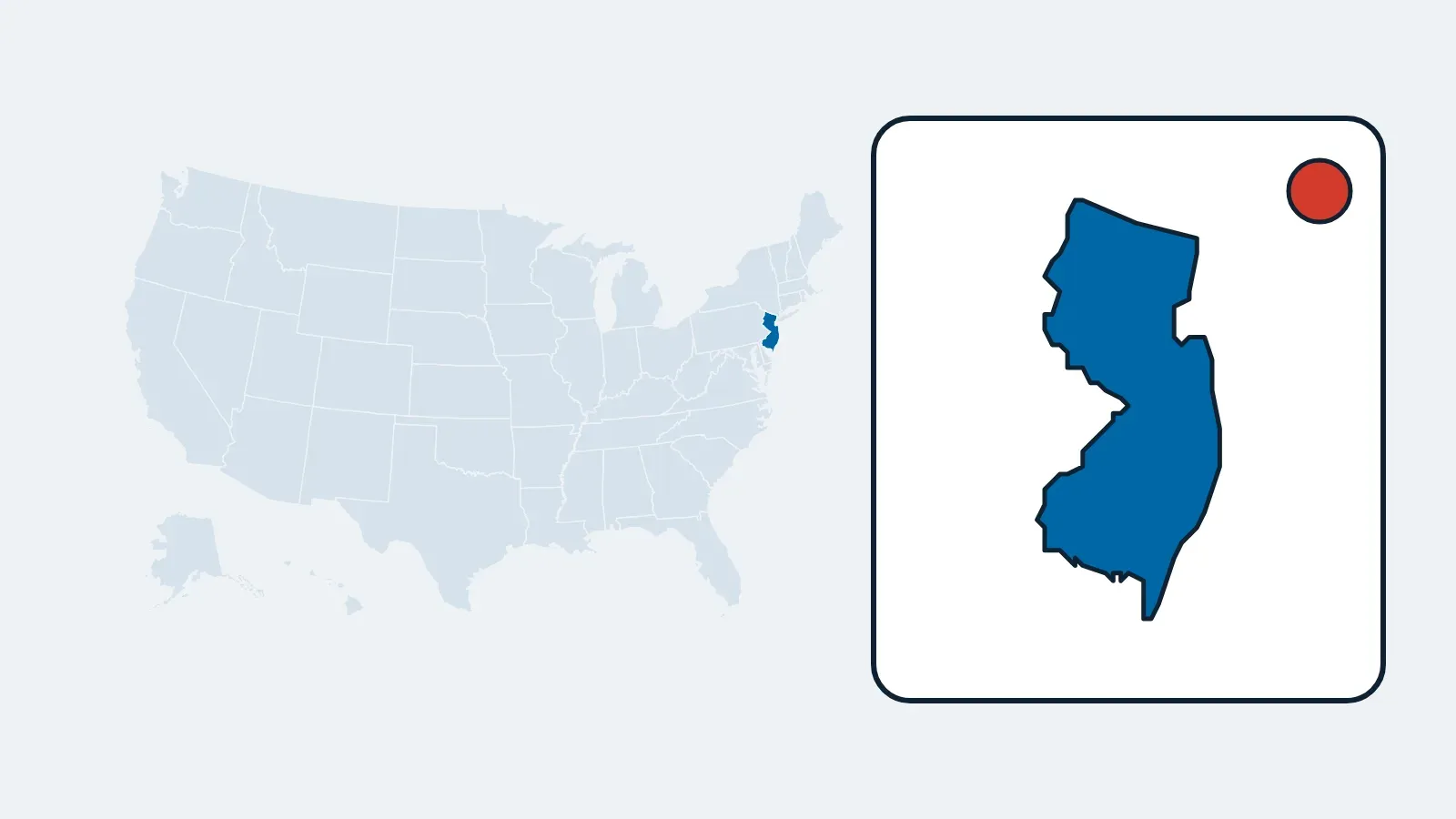
New Jersey policy rules
State schedule- UM coverage rule
- Required
- Minimum liability
- 35/70/25 on a Standard policy since January 1, 2026A Basic policy has $5,000 property damage and optional $10,000 bodily injury liability
- UM/UIM rule
- Required on a Standard policy, at least 35/70The Basic policy has no UM/UIM; PIP of at least $15,000 is required on both
- Insurer cancellation notice
- 20 days; 15 days for nonpaymentOnly for reasons in N.J.S.A. 17:29C-7; underwriting reasons only in the first 60 days
- Nonrenewal notice
- 60 daysN.J.S.A. 17:29C-9; 17:29C-7.1 caps how many policies an insurer may nonrenew
- Regulator
- New Jersey Department of Banking and Insurance
Standard and Basic policies
New Jersey lets you choose between two policy types. The Standard policy is the familiar one: liability, PIP and UM/UIM. Under a 2022 law that raised limits in stages, the lowest liability limits on a Standard policy are now $35,000 per person and $70,000 per accident for bodily injury and $25,000 for property damage. The UM/UIM minimum in N.J.S.A. 17:28-1.1 was $25,000/$50,000 for policies issued or renewed from 2023 through 2025 and is $35,000/$70,000 from January 1, 2026.
The Basic policy is a smaller contract. DOBI's buyer's guide describes it this way:
| Coverage | Standard policy | Basic policy |
|---|---|---|
| Bodily injury liability | $35,000 / $70,000 | None; $10,000 per accident optional |
| Property damage liability | $25,000 | $5,000 |
| PIP | From $15,000 per person, per accident | $15,000, up to $250,000 for certain injuries |
| UM/UIM | Required, from $35,000 / $70,000 | Not available |
Use the limits gap worksheet to see how far the minimums stretch in a larger crash. Keep proof of insurance with you when you drive; DOBI's guide tells drivers to keep it and the registration available at all times.
PIP and the lawsuit option
Personal injury protection pays medical expenses after a crash no matter who caused it. On a Standard policy, DOBI lists PIP limits starting at $15,000 per person, per accident, with higher choices up to $250,000 or more. The usual deductible is $250, and a 20% co-payment applies to medical bills between the deductible and $5,000. You can also make your own health insurer primary for PIP medical bills to lower the premium, but not if your health coverage is Medicare or Medicaid. See personal injury protection for how the coverage reads in a policy.
Your declarations page also shows a lawsuit option. Under the limitation on lawsuit option, you can sue for pain and suffering only for listed injuries, such as a displaced fracture, significant disfigurement, a permanent injury or death. It does not affect claims for economic losses. The Basic policy always comes with this limited right to sue.
Uninsured and underinsured motorist coverage
N.J.S.A. 17:28-1.1 requires every auto liability policy on a car registered or principally garaged in New Jersey, other than a Basic policy, to include uninsured motorist bodily injury coverage at the minimums above, and that required coverage also applies to underinsured vehicles. For policies issued or renewed since 2023, the statute also requires uninsured motorist property damage coverage of $25,000 per accident, with the first $500 of each insured's damage excluded. You may buy higher UM/UIM limits, but not above your own liability limits. The law does not let you stack limits across cars or policies. Part C explains what the coverage pays.
When a New Jersey insurer can cancel
N.J.S.A. 17:29C-7 makes a cancellation notice effective only when it rests on one of these reasons:
- You do not pay the premium or a residual market equalization charge.
- The driver's license or registration of the named insured, or of another regular driver in the household, is suspended or revoked during the policy period.
- Someone knowingly gave materially false or misleading information on the application, at renewal or in a claim.
- Within 60 days after issuing the policy, the insurer finds you do not meet its approved underwriting rules.
Under N.J.S.A. 17:29C-8, the insurer must mail or deliver the notice at least 15 days before the cancellation date when the reason is nonpayment, and at least 20 days before it for any other reason. If the reason is not in the notice, you can ask for it in writing.
You can cancel your own policy at any time. DOBI's guide says that if you switch insurers, you should keep the old policy until the new one starts, and that you can ask for a refund of the unused premium. When you lower limits or drop optional coverages, the guide says the refund of unused premium is due within 60 days. The cancellation refund worksheet helps you estimate it.
Renewal and nonrenewal in New Jersey
Under N.J.S.A. 17:29C-9, an insurer that will not renew must give at least 60 days' advance notice, sent to the address on the policy, and DOBI's consumer guide says the same. No notice is needed when the insurer has offered to renew or the premium was not paid. A nonrenewal can follow from no longer meeting the company's acceptance rules, for example after at-fault accidents or violations, or from limited programs the law allows. N.J.S.A. 17:29C-7.1 caps how many policies an insurer may refuse to renew in a year, including a limit tied to 2% of its policies in a rating territory.
- Read the reason in the notice. If it is unclear, ask the insurer to explain it in writing.
- Call DOBI's consumer hotline at 1-800-446-7467 or (609) 292-7272 if the notice or the reason seems wrong.
- Line up new coverage before the end date. A gap can cost you; see lapse and reinstatement.
Policyholder questions
Is the New Jersey Basic policy enough to drive legally?
DOBI describes it as meeting the state's minimum requirements, but it has no bodily injury liability unless you add the $10,000 option, only $5,000 of property damage liability, and no UM/UIM coverage.
Can I turn down uninsured motorist coverage on a New Jersey Standard policy?
No. The statute requires it at the minimum limits on every policy except a Basic policy. You choose only whether to buy higher limits, up to your liability limits. See Part C.
Can a New Jersey insurer cancel my policy because I filed a claim?
A claim is not one of the cancellation reasons in N.J.S.A. 17:29C-7. Claims and accidents can matter at renewal, with 60 days' written notice.
Sources
- N.J.S.A. 17:29C-7 — Cancellation of automobile policies, permitted reasons (2025 edition, Justia)
- N.J.S.A. 17:29C-8 — Notice of cancellation (2025 edition, Justia)
- N.J.S.A. 17:28-1.1 — Uninsured and underinsured motorist coverage (2025 edition, Justia)
- N.J.S.A. 17:29C-9 — Notice of intention not to renew (2020 edition, Justia)
- N.J.S.A. 17:29C-7.1 — Refusal to renew, conditions (2025 edition, Justia)
- New Jersey Department of Banking and Insurance — Auto Insurance Buyer's Guide 2026
- New Jersey Department of Banking and Insurance — Everything you need to know about auto insurance (2026)
Facts on this page were checked against these sources on November 15, 2026. The Standard policy minimums rose to 35/70/25 for policies issued or renewed on or after January 1, 2026.
Request policy quotes
Answer six questions about the policy you need. PolicyBrook passes the request to licensed insurance agents and insurers who can quote it; you compare and decide.
- The policy you need. Cars, drivers, coverage and ZIP.
- Your contact details and consent to be contacted.
- A licensed insurance agent or insurer contacts you with a quote. Nothing is bound until you sign and pay.
PolicyBrook is not paid by you. The licensed insurance agents and insurers who contact you set their own prices and terms. How we make money.
Related readings
-
Policy event
Insurer cancellation
After 60 days, only listed reasons; 10 to 60 days' notice by state, and how to appeal.
-
Endorsement
Personal injury protection
No-fault injury coverage: $10,000 required in Florida, rejectable in Texas, offered in Washington.
-
Policy part
Uninsured motorists (Part C)
Four kinds of uninsured vehicle, who is insured, limits, 60-day trial right after arbitration, state rules.