State: Reject in writing
California: The Rules Your Auto Policy Must Follow
California raised its minimum limits in 2025, puts uninsured motorist coverage on every policy unless you sign a waiver, and narrows the reasons an insurer may give for cancelling or refusing to renew. Here is how those rules apply to your policy.
By PolicyBrook Editorial Team Updated 6-minute read
Declarations
California- UM/UIM rule
- Waiver in writing
- Minimum liability
- 30/60/15
- Insurer cancellation notice
- 20 days (10 nonpayment)
- Nonrenewal notice
- 30 days
In brief
A California policy issued or renewed on or after January 1, 2025 must carry at least $30,000/$60,000/$15,000 of liability coverage. Uninsured motorist coverage is part of every bodily injury liability policy unless the named insured and the insurer agree in writing to delete or reduce it. An insurer must give 20 days' notice to cancel, or 10 days' for unpaid premium, and 30 days' written notice before it declines to renew. Proposition 103 limits both decisions to a short list of reasons. The California Department of Insurance regulates insurers.
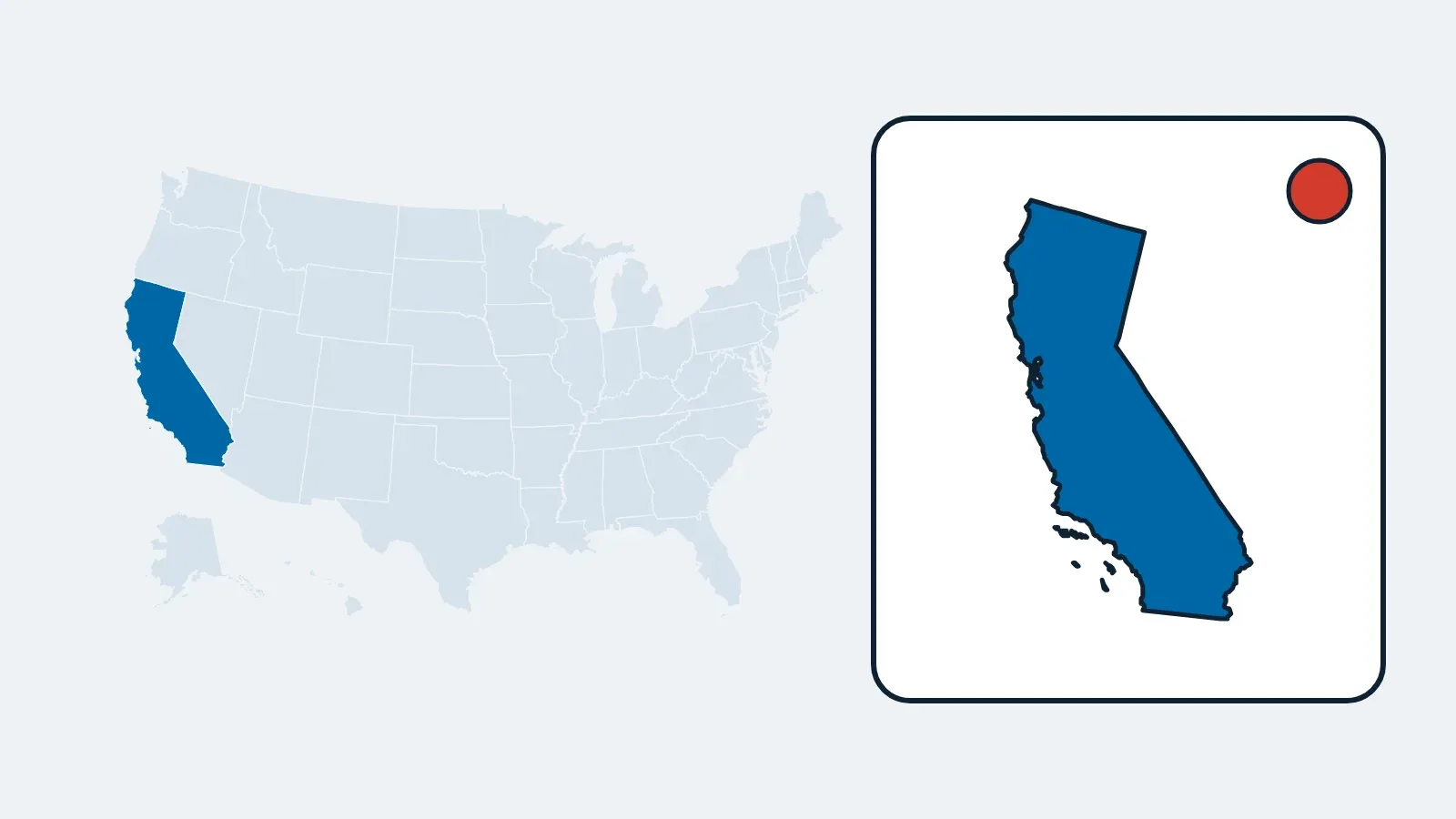
California policy rules
State schedule- UM coverage rule
- Reject in writing
- Minimum liability
- 30/60/15For policies issued or renewed on or after January 1, 2025; rises again in 2035
- UM/UIM rule
- Included unless deleted or reduced by signed written agreementStatutory waiver wording required (Ins. Code §11580.2); waiver carries to renewals
- Insurer cancellation notice
- 20 days; 10 days for nonpaymentOnly for reasons in §661 and Prop 103 (§1861.03(c))
- Nonrenewal notice
- 30 daysWritten notice under §663; Prop 103 limits the reasons
- Regulator
- California Department of Insurance
Minimum limits on a California policy
Vehicle Code Section 16056 sets the floor. For a policy issued or renewed on or after January 1, 2025, it is $30,000 for injury or death of one person, $60,000 for two or more people, and $15,000 for property damage. Before that date the minimum was 15/30/5, so a policy that has renewed since then now shows the higher limits. The same section adds $20,000, $40,000 and $10,000 to those figures for policies issued or renewed on or after January 1, 2035, which works out to 50/100/25.
The DMV reminds drivers to carry proof of coverage whenever they drive and to show it to the other driver after a collision. The limits gap worksheet shows how far the current minimum goes in a sample crash.
Uninsured motorist coverage and how to waive it
Insurance Code Section 11580.2 requires uninsured motorist coverage in every bodily injury liability policy on a vehicle principally used or garaged in California. It must match the policy's bodily injury limits, although the insurer does not have to offer more than $30,000 per person and $60,000 per accident, and it can never drop below the financial responsibility minimum.
You can remove or reduce it only by a written agreement with the insurer. The agreement must use the wording the statute prescribes, which begins by stating that California law requires the insurer to provide the coverage. The same route lets you exclude coverage while a named person drives.
| Choice | Allowed? | Carries over to |
|---|---|---|
| Delete the coverage completely | Yes, by signed agreement | Renewals and same-insurer replacements |
| Lower the limits | Yes, not below the financial responsibility minimum | Renewals and same-insurer replacements |
| Reinstate after a lapse of up to 30 days | Earlier waiver still applies | The reinstated policy |
Underinsured motorist coverage is offered at the same limits and is treated together with uninsured coverage as one coverage. Read Part C for how it pays after a crash with an uninsured or underinsured driver.
When a California insurer can cancel your policy
Two layers of law apply to a private passenger policy that covers one person or one household. Section 661 says a cancellation notice is effective only for these reasons:
- You do not pay the premium.
- The license or registration of the named insured, or of another regular driver in the household, is suspended or revoked.
- The named insured commits fraud in pursuing a claim.
- There was a material misrepresentation about a listed rating factor, such as the driving record, annual mileage, years of experience or prior claims.
- The hazard insured against increases substantially.
On top of that, Proposition 103 (Insurance Code Section 1861.03(c)) says a notice to cancel or not to renew an auto policy is effective only if it rests on nonpayment, fraud or material misrepresentation, or a substantial increase in the hazard.
Section 662 sets the timing: the insurer must mail or deliver the notice at least 20 days before the cancellation date, or 10 days for unpaid premium, and a nonpayment notice must give the reason. If a notice for another reason leaves out the reason, you can ask for it in writing; your request must reach the insurer at least 15 days before the cancellation date. To estimate the money you get back, use the cancellation refund worksheet.
Renewal and nonrenewal in California
Section 663, in force since January 1, 2019, gives the insurer two options before the term ends: a renewal offer at least 20 days before expiration, or a written nonrenewal notice at least 30 days before expiration that includes the statement Section 666 requires. A verbal renewal offer that you turn down must be confirmed in writing at least 20 days before expiration.
Where to ask and complain
- Ask for the reason in writing if your cancellation notice does not include it, at least 15 days before the cancellation date.
- Contact the California Department of Insurance at insurance.ca.gov if the reason is not one Proposition 103 allows or the notice arrived late.
- Line up new coverage before the end date. See lapse and reinstatement.
Policyholder questions
Did California's minimum car insurance limits change?
Yes. Policies issued or renewed on or after January 1, 2025 must carry at least 30/60/15, up from 15/30/5. The Vehicle Code adds another increase for policies issued or renewed from January 1, 2035.
Can a California insurer refuse to renew me because of a claim?
Proposition 103 allows a nonrenewal only for nonpayment, fraud or material misrepresentation, or a substantial increase in the hazard insured against. The insurer must also give 30 days' written notice.
How do I drop uninsured motorist coverage in California?
You and the insurer sign a written agreement in the wording the Insurance Code prescribes. The waiver then applies to renewals with the same insurer. See Part C first.
Sources
- California Insurance Code §§660–669 — Cancellation or failure to renew (2025 edition, via Justia)
- California Insurance Code §663 — Renewal offer and nonrenewal notice (via California Public Law)
- California Insurance Code §11580.2 — Uninsured motorist coverage (via California Public Law)
- California Insurance Code §1861.03 — Proposition 103 limits on cancellation and nonrenewal (via FindLaw)
- California Vehicle Code §16056 — Minimum limits from January 1, 2025 and 2035 (via California Public Law)
- California DMV — Driver Handbook: financial responsibility and insurance requirements
Facts on this page were checked against these sources on November 15, 2026. California's minimum rose to 30/60/15 for policies issued or renewed from January 1, 2025, and a further increase is scheduled for 2035.
Request policy quotes
Answer six questions about the policy you need. PolicyBrook passes the request to licensed insurance agents and insurers who can quote it; you compare and decide.
- The policy you need. Cars, drivers, coverage and ZIP.
- Your contact details and consent to be contacted.
- A licensed insurance agent or insurer contacts you with a quote. Nothing is bound until you sign and pay.
PolicyBrook is not paid by you. The licensed insurance agents and insurers who contact you set their own prices and terms. How we make money.
Related readings
-

Policy event
Insurer cancellation
After 60 days, only listed reasons; 10 to 60 days' notice by state, and how to appeal.
-
Policy event
Nonrenewal
Notice periods from 15 to 75 days, reasons states bar, and how to ask the regulator for review.
-
Policy part
Uninsured motorists (Part C)
Four kinds of uninsured vehicle, who is insured, limits, 60-day trial right after arbitration, state rules.